Process patterns

What we transform

The document changes; the pattern rarely does. These are the process patterns we rebuild, with examples from both the private and public sector.

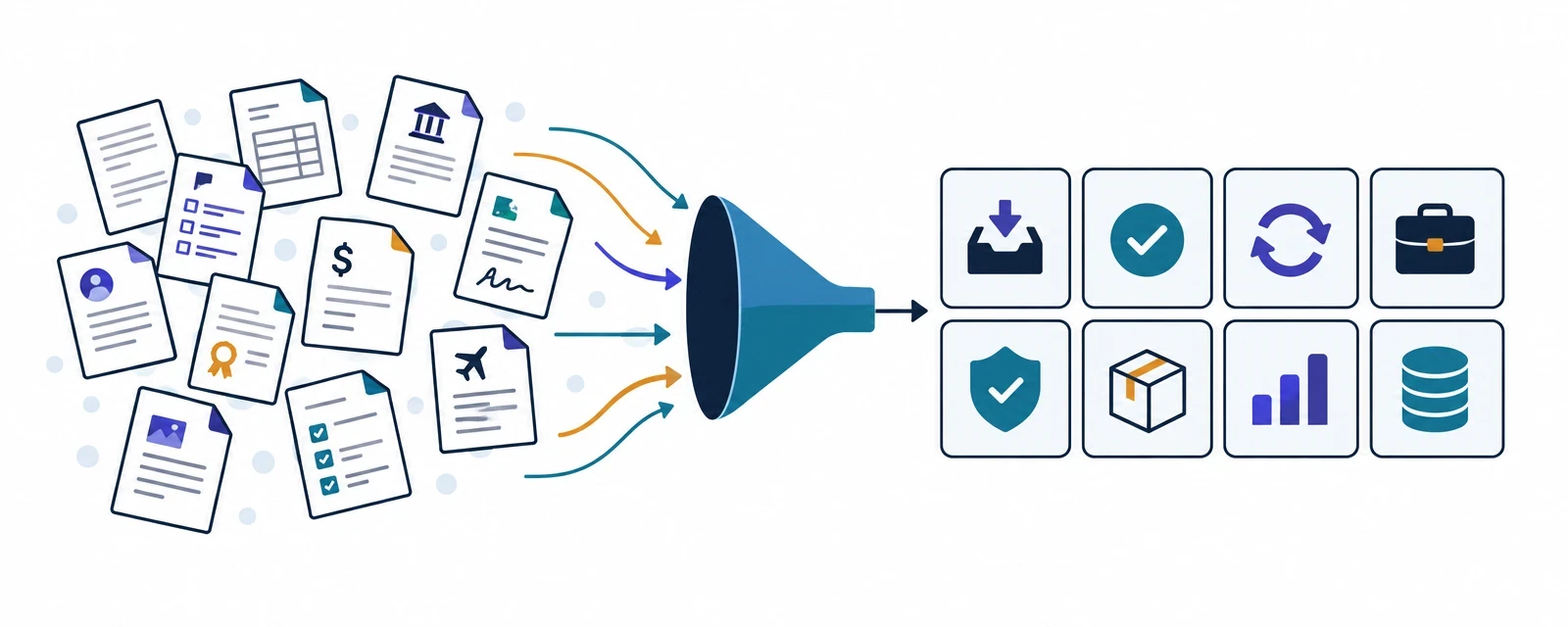
Many different documents from companies and governments flowing into a small set of repeatable process patterns
Many kinds of documents, a small number of repeatable patterns.
Outcomes key:EfficiencyCostAuditabilityControl
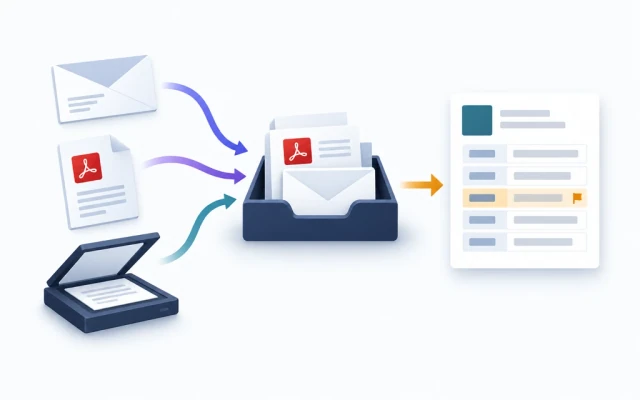
Documents arriving from many channels become one structured record
01

Intake & classification

EfficiencyAuditability
Symptoms

Shared inboxes, PDFs, re-keying.

What changes

AI-assisted extraction with low-confidence flagging, one record per item, completeness checks at arrival.

Company example
Vendor invoices in distribution
Public-sector example
Permit or benefit applications
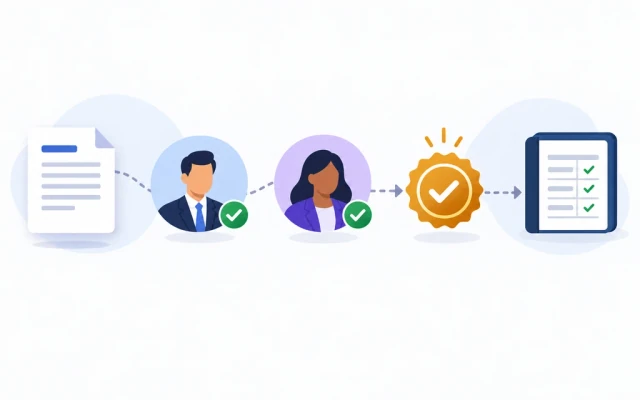
An approval chain with named approvers and a recorded decision
02

Approvals & workflow

ControlAuditability
Symptoms

Email chains, no record of who approved what.

What changes

Enforced approval steps, role-based access, audit history.

Company example
Purchase approvals
Public-sector example
Licensing decisions
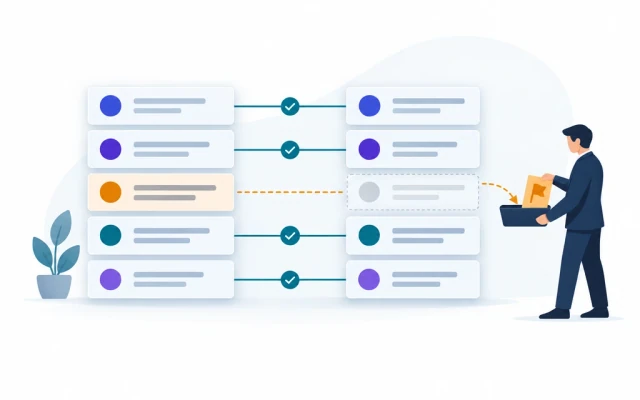
Records matched against master data with exceptions routed to an owner
03

Reconciliation & validation

CostControl
Symptoms

Spreadsheet matching, monthly surprises.

What changes

Daily automated validation against master data, exception queues routed to owners.

Company example
SAP product and compliance validation; statement reconciliation
Public-sector example
Customs declarations
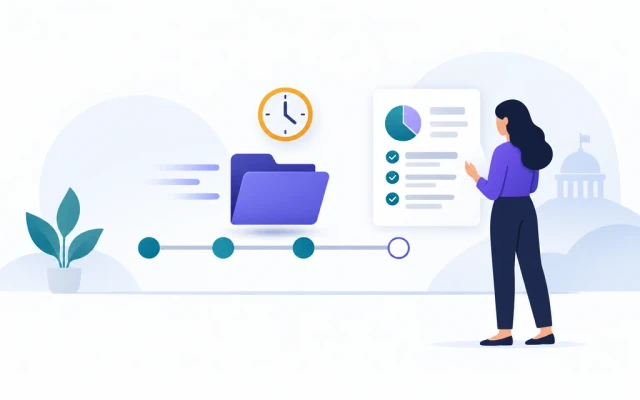
A case moving through stages with visible status and SLA
04

Case handling

EfficiencyControl
Symptoms

Files move by hand, status unknown.

What changes

Single system of record, status visibility, SLAs, AI-drafted summaries reviewed by staff.

Company example
Client onboarding
Public-sector example
Immigration or social-insurance cases
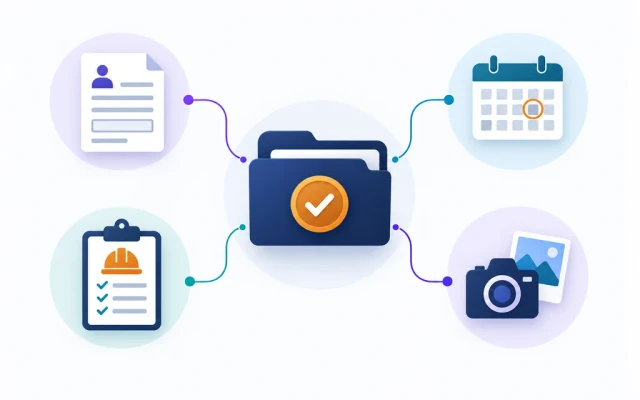
Permit application, inspection visit and evidence linked to one case record
05

Permits, licences & inspections

EfficiencyAuditability
Symptoms

Applications move desk to desk by hand, inspections are scheduled by phone and spreadsheet, evidence sits in personal folders, and applicants cannot see where they stand.

What changes

One case record per application, completeness checks at arrival, routing to the right officer, inspection scheduling, evidence captured and linked to the record, and status the applicant can see.

Company example
Site and facility compliance inspections
Public-sector example
Building permits, business licences, health inspections
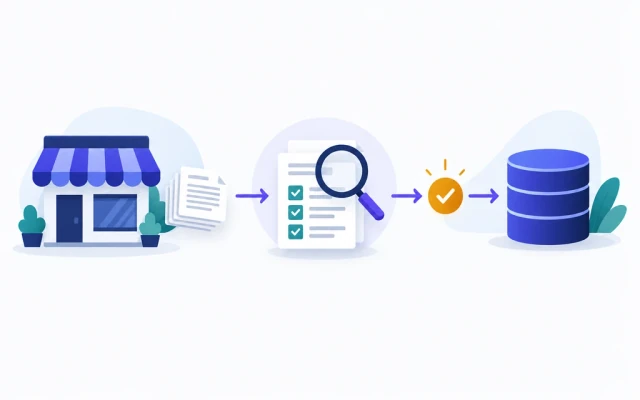
Vendor documents validated and approved into master data
06

Procurement & vendor onboarding

CostControl
Symptoms

Inconsistent vendor documents, missing master data.

What changes

Standardized document intake, validation, approval trail.

Company example
Vendor and SKU onboarding
Public-sector example
Tender intake under a procurement code
A leadership dashboard showing backlog, exceptions and cycle time
07

Reporting & oversight

Control
Symptoms

Leadership has no consolidated view.

What changes

Daily exception and readiness reporting, dashboards.

Company example
Daily shipment-readiness and exception report
Public-sector example
Departmental backlog and SLA dashboard for the accountable officer
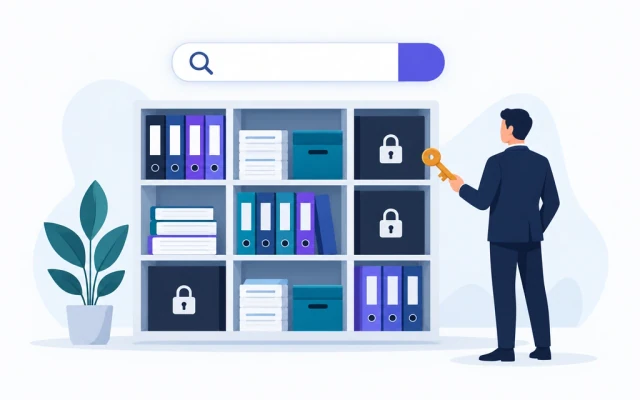
A governed search across policies and procedures with access boundaries
08

Knowledge retrieval

EfficiencyControl
Symptoms

Institutional knowledge is trapped in files and hard to retrieve when it matters.

What changes

Make internal knowledge retrievable with controls that respect confidentiality and access boundaries.

Company example
Precedent and policy retrieval in a professional-services firm
Public-sector example
Policy and procedure retrieval for public servants
Common objections

What front-line leaders usually ask

Our document formats vary too much

That is why the process uses format-specific and default extraction models plus exception handling, not a single rigid template.

Front-line teams need clarity, not another tool

The goal is visibility and control — one governed record — not another disconnected system to babysit.

We still need human judgment

Human review stays where it matters while AI removes the repetitive extraction and tracking work.

Have a process that is slow, expensive or hard to audit?

Tell us about it in 30 minutes. You will leave with three places to look and an honest view of whether AI belongs there.